
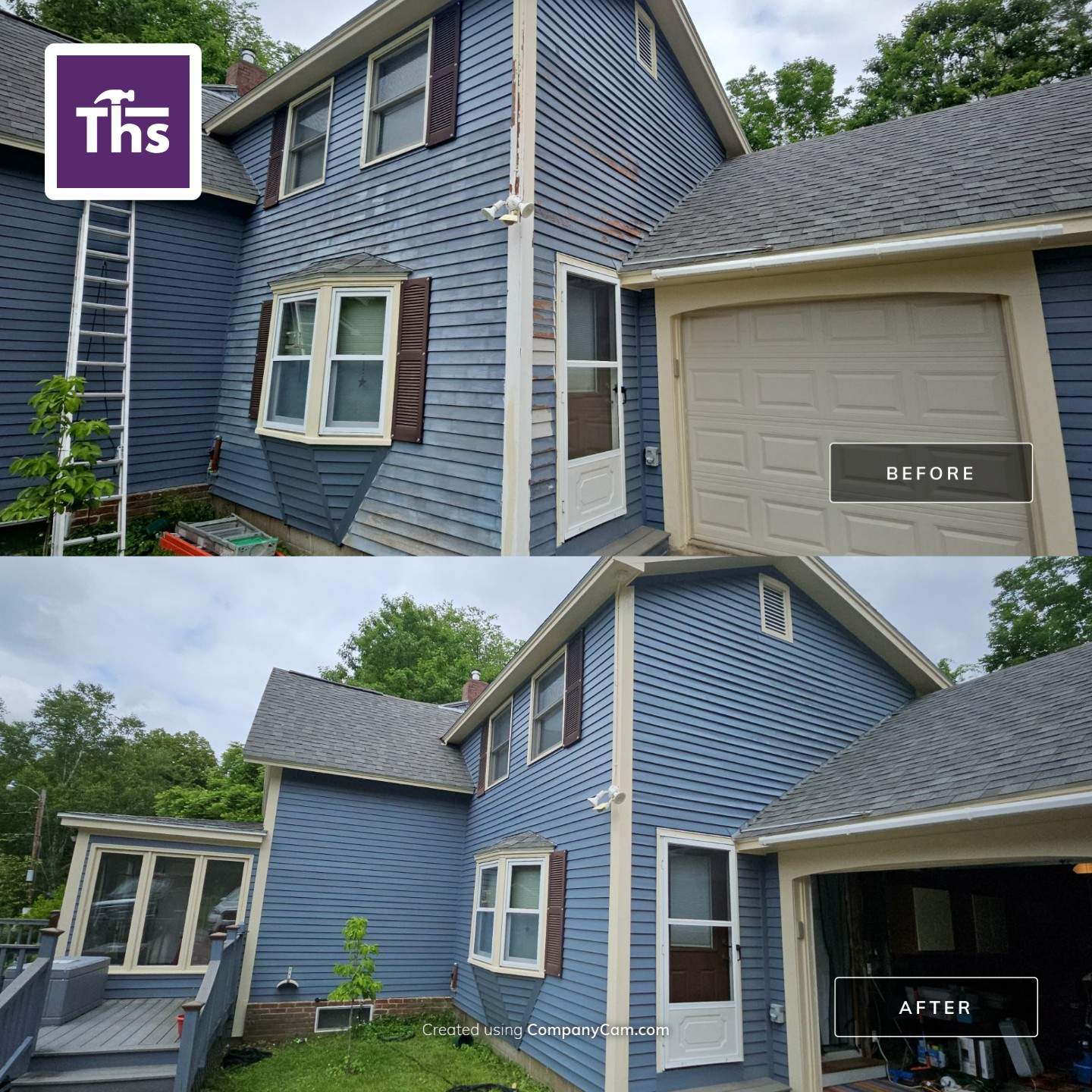
There are many more limitations and restrictions on exterior house painting than interior paint jobs. Outdoor weather elements can interfere with your paint’s performance and drying times if you don’t think ahead and schedule the timeline of your project perfectly.
Imagine finishing up with your paint, only for unpredictable weather to hit the area, with unexpected rain, wind, snowfall, or high humidity? That’s hours of manual labor and money spent on paint buckets going down the drain.
To keep such worries at bay, our guide provides a detailed answer to a pressing question: When is the best time of year to paint your house exterior?
What Is the Best Time of Year to Paint a House Exterior?
The best time of the year to paint your home’s exterior is when the weather turns mild, which is in late spring, early summer, or early fall. In such times, the temperatures are moderate, humidity is low, pollen doesn’t pose a risk, and there’s a lower likelihood of rain and snow.
Plus, you won’t have to worry about leaves sticking to your paint while it’s still wet.
In most states, May presents a fantastic opportunity. However, New Hampshire homeowners prefer to wait until fall because that’s when temperatures are ideal for exterior paint jobs, avoiding too-hot, too-humid summers and freezing cold winters.
New Hampshire weather in spring might work out, too, but not always. While temperatures rise to 50–55 °F during that month, they’re still slightly lower than the preferable temperature range for a flawless outdoor painting project.
What Temperature and Weather Conditions Are Best for Exterior Painting?
It’s not enough to know which month or season is best for exterior painting. You need to keep an eye on the weekly weather forecasts to check temperature ranges, which can dip or rise suddenly with NH’s unpredictable weather.
You’ll also have to watch out for factors like humidity, the possibility of rain, wind, and sunlight.
Ideal Temperature Range
The optimal temperature range for an outdoor painting project using latex (water-based) paints is between 50°F–85°F. That’s when you can be certain that the paint will dry equally and cure properly.
Oil-based paints might be more flexible, suitable for application at lower temperatures (40°F).
But what happens if you paint your home at higher or lower temperature ranges?
If it’s too hot, the paint will dry fast, but it won’t adhere to the surface well. The result is a cracked or peeled appearance. In too cold weather, paint will take too long to cure, its soft texture easily affected by dirt, moisture, or other outdoor elements.
Humidity Levels
For the best performance, aim for low humidity to help your paint dry quickly.
An excellent range is 40%–70%. Don’t go any lower, or you might end up with blistered, cracked paint, which is similar to the effect of high temperatures.
Rain and Moisture
Ideally, you’ll want to set aside several precipitation-free days for your paint job. However, if your schedule is too tight, at least wait 24 hours before starting your project after rain.
When you’re done, you’ll need dry weather for another 24 hours, even if most paints only require 2–4 hours to set in completely. Light rain shouldn’t be a problem if it occurs within a couple of hours after you finish, but a full-on downpour could cause significant damage.
You can keep all these concerns at bay by dedicating a few days to your exterior paint job. This approach factors in delays, interruptions, or if the weather forecast is off by a day or two.
Wind and Direct Sunlight
Lastly, make sure you stay away from windy weather, as high winds can blow dirt and debris onto painted surfaces.
Avoid harsh, direct sunlight, too, to keep it from “baking” your paint, which can cause it to dry rapidly and peel.
The Best Time to Paint Your House Exterior, Season by Season
Each season, some more than others, has that sweet window where it’s advisable to paint your house exterior.
Spring and fall offer the best opportunities (fall even more so, in New Hampshire), but summer and winter could provide some rare occasions, too.
Spring Exterior Painting
If you decide to paint your home’s exterior in the spring, aim for late May and early June. That’s when the weather gets mild in most states, and the temperatures climb to desirable levels.
Still, you should be on the lookout for rain or the occasional snowfall, which can sometimes happen in New Hampshire in the spring.
Summer Exterior Painting
It’s best to avoid painting your home’s exterior in the summer. If you absolutely have to, target days where there’s a respite from high humidity and temperatures exceeding 85°F.
Early or late summer (late June or early September) is when you’re more likely to experience such weather conditions.
Fall Exterior Painting
Fall is usually foolproof when planning an exterior painting job across all regions of New Hampshire and most of the United States. Early fall is better than late, because you don’t want to trouble yourself with leaves blowing into the paint and messing it up.
Also, bugs that come out and thrive in the summer should be gone by fall, so there’s a lower chance of them getting on wet paint.
Winter Exterior Painting
While exterior painting in winter isn’t recommended for New Hampshire homeowners, it might be possible. But you have to be extra careful due to the especially cold climate of NH, steering away from days when the temperatures drop below freezing.
Look for paints specifically designed for low temperatures, and pay attention to the weather forecasts to avoid rain, snowfall, and strong winds.
Does Your Home’s Exterior Material Affect Painting Timing?
Yes, your home’s exterior materials react to heat or cold differently, affecting the surface temperature and impacting painting timing.
For example, brick, wood, and stucco absorb and hold on to overnight chill or daytime heat for hours afterward. Therefore, it’s best to paint these surfaces in the mid-morning or late afternoon so that they aren’t too hot or too cold to the touch.
Other materials, like vinyl, let go of cold or heat in a shorter time. You can apply paint to them earlier in the day.
How Weather and Timing Affect Paint Adhesion and Durability
Weather and timing are closely linked to paint adhesion and durability.
If it’s too cold, humid, or there’s rain, the paint will take too long to dry. Moisture can get between the paint and the surface you’ve applied it to, causing poor adhesion and bonding. Then, it’ll only be a matter of time before the paint starts to peel off or show annoying bubbles.
The same goes for high temperatures or too-dry conditions. They make the paint adhere to the surface too quickly and unevenly, resulting in a cracked appearance. Soon enough, the paint will begin to fall off of your exterior walls.
Signs Your Home’s Exterior Is Ready for a Repaint
Look for these tell-tale signs that your home’s exterior needs a repaint:
- Seeing the surface underneath peeling or cracking paint
- Noticing fading colors due to years of sun exposure
- Running your fingers on painted surfaces and finding caulking powder residue
- Coming across black or green stains, which point to mold or mildew
Exterior paint requires changing every seven years anyway, even if you don’t notice any of these signs yet. They’ll likely happen soon. Also, regular exterior painting keeps your home looking fresh and polished.
How to Prepare Your Home Before Exterior Painting
Ready to tackle that exterior paint challenge? It starts with proper preparation, and choosing the right weather conditions is only the first step in doing that:
- Start by buying your paint supplies from your nearest hardware store (caulk, a pressure washer, a paint sprayer, a wire brush, spray primer, painter’s plastic, and cleaning rags).
- Put on a pair of safety goggles and wash your home’s exterior with the pressure washer. The surface needs to be clean and completely free of dust and debris that could get in the way of a seamless-looking coat.
- Don’t go too hard with the pressure washer, or you might cause damage to your home’s exterior materials.
- Use a paint scraper to get rid of any loose or peeling paint. You don’t want to scrape off all the old paint, just any clumps that’ll keep you from getting an even look.
- Move with the wood grain’s direction when you scrape so you don’t scratch the surface.
- Grab the wire brush and clear away any loose debris after scraping.
- Apply two coats of your preferred primer or sealer to fill in any spots left exposed after you scraped off the old paint. This step boosts the durability and adhesion of new paint while keeping moisture at bay.
- After priming, apply caulk to seams and cracks. It should be ready for you to paint over in two hours.
- Lastly, cover your windows, landscaping, and any exterior decorative elements with protective plastic to keep the paint from getting on them.
- Now, your home’s exterior is 100% ready for your paint application!
Should You Paint Your House Exterior Yourself or Hire a Professional?
Exterior house painting might seem like an easy DIY project, but it’s trickier than it looks. Getting the timing, paint type, and prep work right takes real experience, and one wrong step can cost you more time and money than you bargained for.
That’s why hiring a professional is often the better choice. You don’t have to worry about the right weather or timing, what kind of paint works best for your home, shopping for supplies, or getting the task done in a timely fashion. It’s all taken care of for you.
A professional painter with years of expertise ensures you get the highest quality and a smooth, clean finish. They’ll also catch problems like rot or moisture damage before they turn into bigger headaches. Most contractors offer guarantees and warranties, too. Their speed, efficiency, and attention to detail will be unmatched!
How Far in Advance Should You Schedule Exterior Painting?
If you’ll complete the project yourself, you can schedule it a week in advance to make sure the weather is right.
However, dealing with a contractor will require you to schedule your exterior painting job three to six months before to account for their availability.
Planning Your Exterior Painting Project with Tuck Home Services
Does planning and scheduling your exterior painting project sound like a hassle? If you don’t have the time or experience to complete this job on your own, get in touch with THS (Tuck Home Services) and put your mind to rest.
Based in central New Hampshire and servicing Campton, Woodstock, and more, Tuck Home Services is fully equipped to handle the most daunting of exterior paint jobs.
The team of experts is ready to tackle rot and structural damage before painting your home. Their priority is to adhere to industry safety standards and deliver premium results.
FAQs
What is the ideal temperature to paint outside?
For error-free paint application with no blisters, bubbles, or peeling, aim for outdoor temperatures between 50°F–85°F.
That’s why experts recommend waiting until late spring or early fall to paint your house exterior.
How cold is too cold to paint a house exterior?
If you’re using water-based paints, lower than 50°F is too cold for the exterior paint to properly dry and bond with the surface.
Oil-based alternatives are more suitable for colder weather, with the minimum required temperature being 40°F.
How long should paint dry before it rains?
If it’s light rain, two to four hours is enough drying time for exterior paint.
Ideally, paint should dry for at least 24 hours before a full downpour.
Can you paint a house after rain?
Yes, there’s nothing wrong with painting a house after rain, as long as you wait 24 hours before starting your task.
If you start sooner, any leftover moisture from the wet weather will increase the overall humidity of your surroundings, resulting in poor adhesion.
How often should you repaint your home’s exterior?
You don’t have to wait for the old paint coat to fade or peel off. To give your home a permanent fresh look, you must repaint your home’s exterior every seven to ten years.